

Report
Resourcing Global LBQ Activism: Three Years of LBQ Connect Grantmaking
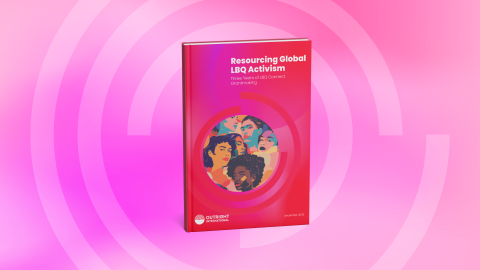
Only 5% of global LGBTIQ funding reaches lesbian, bisexual, and queer (LBQ) issues. For three years, Outright International's LBQ Connect program worked to change that.
Between 2022 and 2025, LBQ Connect distributed over US$700,000 to grassroots organizations primarily in the Global South and East, many of which received external funding for the first time. The program connected 300 activists from 90 countries, built leadership capacity, and demonstrated what's possible when LBQ people lead movements.
This report reflects on three years of feminist, participatory grantmaking: what worked, what we learned, and why direct support to LBQ activism matters more than ever.
Download the full report to explore our findings, case studies from seven countries, and lessons for funders committed to resourcing underserved communities.
By the Numbers
- 63 Projects Funded in 44 countries
- $726,105 Distributed
- 22 First-Time Grantees
- 300 Activists from 90 Countries Connected
Why This Report Matters
LBQ women and nonbinary people face a unique set of human rights challenges. They confront misogyny, homophobia, and heteronormativity simultaneously—often in contexts where they experience discrimination based on gender and sexuality combined with race, class, and disability.
Yet LBQ communities remain radically underfunded. Data on their experiences is scarce. Their issues are marginalized in women's rights and sometimes even within LGBTIQ movements. And LBQ women remain underrepresented in leadership roles.
LBQ Connect was designed to address these gaps through four interconnected pillars: learning and mentorship, grantmaking, research and documentation, and advocacy. This report focuses on the grantmaking component—examining what we funded, how we funded it, and what the projects reveal about LBQ priorities worldwide.
The program was paused in early 2025 due to the sudden withdrawal of U.S. government funding. This makes documenting its impact and lessons all the more urgent.
What's Inside the Report
The LBQ Connect Model
Learn how Outright designed a grantmaking program that intentionally addressed power imbalances in international philanthropy:
- Participatory decision-making through a Sounding Board of 12 LBQ activists from the Global South and East
- Multilingual accessibility with applications accepted in English, French, and Spanish
- Flexible eligibility that welcomed unregistered groups and first-time grantees
- Broad thematic scope that let communities define their own priorities
Regional Distribution of Grants
The program prioritized the Global South and East:
- Africa: 26 grants
- Latin America: 15 grants
- Asia: 13 grants
- Caribbean: 3 grants
- Europe: 3 grants (Türkiye and Armenia)
- Southwest Asia and North Africa: 2 grants
- Pacific: 1 grant
Five Recurring Themes
Analysis of 63 funded projects revealed consistent priorities across regions:
Health
LBQ women's health is ignored in most mainstream health programs worldwide. Funded projects addressed access to sexual and reproductive health and the critical need for LBQ-affirming mental health services. From Kenya to Kazakhstan to Jamaica, grantees filled gaps left by public health systems.
Gender-Based Violence
LBQ women experience higher rates of gender-based violence due to intersecting forms of oppression. Projects in Kenya, the Democratic Republic of the Congo, Colombia, the Dominican Republic, and Zimbabwe documented violence, supported survivors, and pushed for protective policies.
Families
LBQ couples face systemic barriers to creating and protecting their families. Grantees in Bolivia, Guatemala, Kazakhstan, Chile, Benin, and Taiwan increased visibility of diverse families, documented challenges, and advocated for recognition.
Economic Empowerment
LBQ women are systematically excluded from mainstream economic empowerment initiatives and traditional family support networks. Projects in Côte d'Ivoire, Kenya, Zambia, Mexico, and Chile provided skills training, supported entrepreneurs, and created pathways to economic independence.
Community Organizing
LBQ women have few safe spaces to organize. Funded projects created networks, documented LBQ stories, and used art and creativity as tools for community building and well-being.
Case Studies
The report features in-depth case studies from seven grantee organizations:
Tamùkke Feminists, Guyana
A queer-led feminist collective that conducted groundbreaking research on LBQ women's sexual health and launched the "Under the Benab" feminist gathering series, reaching 66 LBQ individuals.
SISTA Zimbabwe
Produced "Induku Kayakhi Muzi" (Violence Destroys the Home), a study on intimate partner violence experienced by LBQ women in Zimbabwe, where all respondents reported experiencing some form of violence in their lives.
Visibles, Guatemala
Created "Maternidades Diversas," the first study of its kind in Guatemala exploring parenting experiences of lesbian, bisexual, and nonbinary people, alongside a support group for LBQ parents.
Ndabaga's Sisters Organization, Rwanda
Conducted comprehensive research on the socioeconomic status of LBQ and gender nonconforming individuals, revealing 30% unemployment and that only 42% have workplace protections against discrimination.
Nazariya, India
Launched "A Suitable Workplace Campaign," a series of short films addressing subtle workplace discrimination against LBTQ persons, premiered to over 70 participants from diverse corporate backgrounds.
Initiative Tilé, Côte d'Ivoire
Trained 10 LBQ women in e-commerce and digital entrepreneurship—including those with disabilities—directly creating eight jobs and launching four new businesses.
Queer Women Leaders Uganda
Implemented two residential programs on political engagement and feminist leadership, training 30 LBQ women to engage with local governance and develop personal leadership action plans.
Feminist Leadership in Action
LBQ Connect was about transforming leadership.
For many participants, the program provided their first opportunity to design and manage a project, introduce LBQ-specific programming within their organizations, or assume leadership roles. The experience significantly enhanced participants' skills and confidence, empowering them to take on more significant roles.
Quote from Shantae
"The program gave me a new opportunity to step into leadership. I proved to myself that I could create, execute, and take responsibility for a program."
Quote from Eden
"When I joined the LBQ Connect program, I was working as a program coordinator, and, by the end of the program, I was promoted to Program Manager because of the significant growth in my skills and capacity."
Quote from Samimi
"LBQ Connect has placed its trust in us as a young organization. This project gave us confidence, visibility, and recognition among other organizations, which helped us obtain other resources. We started to be taken seriously."
Nine Lessons for Funders
The report concludes with key lessons from three years of LBQ Connect grantmaking:
- LBQ work is happening everywhere — in smaller and larger organizations, across all regions, within LGBTIQ, LBQ, feminist, and other social justice spaces.
- Many LBQ grantees are small groups with limited funding and staff. LBQ Connect funding was often their first or largest grant ever.
- Registration barriers are real. Many groups are unregistered due to hostile legal contexts. Funders must work with fiscal hosts and reduce administrative barriers.
- Supporting small groups builds recognition. Funding helped organizations increase their visibility among other donors, intermediaries, and stakeholders.
- Both LGBTIQ organizations and independent LBQ groups matter. They contribute differently to a stronger ecosystem for LBQ people and communities.
- LBQ projects often focus on community work — including economic empowerment, arts, and mental health — rather than traditional advocacy.
- Research fills critical gaps. More than half of funded projects included research, often in the form of community needs assessments.
- LBQ work is intersectional. It connects with disability rights, climate justice, sexual and reproductive health, and indigenous rights movements.
- Direct resourcing transforms movements. Supporting LBQ initiatives strengthens communities and changes leadership and visibility within the broader LGBTIQ and social justice movements.
Who Should Read This Report
- Funders and philanthropic organizations seeking to resource underserved LGBTIQ communities
- Grantmakers interested in participatory and feminist funding models
- LGBTIQ advocates and activists working on LBQ issues
- Nonprofit leaders building inclusive programs
- Researchers studying LGBTIQ movements and philanthropy
- Policymakers developing inclusive approaches to civil society support
Download the Report
Resourcing Global LBQ Activism: Three Years of LBQ Connect Grantmaking offers a comprehensive look at what it takes to fund LBQ movements—and what those movements can accomplish with intentional support.
About LBQ Connect
LBQ Connect was a global program for lesbian, bisexual, and queer women—including cisgender, trans, and intersex women, and all nonbinary and genderqueer people who relate to an LBQ identity. Launched in 2022, the program ran for three cycles until the U.S. government funding withdrawal in early 2025.
While LBQ Connect is currently paused, Outright International's commitment to advancing the rights of LBQ women worldwide, including through grantmaking to LBQ activism through other funded programs, continues.
Frequently Asked Questions
What is LBQ Connect?
LBQ Connect was Outright International's global program designed to strengthen LBQ activists' skills, create networks across regions, support LBQ-focused programs, fill gaps in knowledge, and increase visibility in media and advocacy spaces. It operated from 2022 to early 2025.
What does LBQ mean?
At Outright, we use LBQ as an inclusive term that refers to lesbian, bisexual, and queer women, including cisgender, transgender, and intersex women, as well as non-binary and gender-diverse people who identify with or have affinity to LBQ experiences and communities.
We recognize that language is constantly evolving and that no single term can capture the full richness and diversity of people’s identities and lived experiences. We are also aware that people around the world use different languages and concepts to define themselves as communities, and that translations are often imperfect.
LBQ is used not as a term to delineate boundaries, but rather as a tool to establish common ground — connecting the experiences of women and of queer people, and reflecting forms of organizing, community, and solidarity that exist at the intersections of gender and sexuality.
Why was the program paused?
LBQ Connect was paused in early 2025 due to the sudden withdrawal of U.S. government funding through the Global Equality Fund, which had been the program's primary funder.
How much funding did LBQ Connect distribute?
Over three program cycles, LBQ Connect distributed US$726,105 to 63 projects in 44 countries.
What types of projects did LBQ Connect fund?
The program supported a wide range of LBQ-focused projects, including research, community organizing, health initiatives, economic empowerment programs, advocacy campaigns, and arts and cultural projects. Rather than restricting funding to specific themes, the program allowed communities to define their own priorities.
What is participatory grantmaking?
Participatory grantmaking involves sharing decision-making power with affected communities. In LBQ Connect, a Sounding Board of 12 LBQ activists from the Global South and East played a decisive role in shaping priorities, reviewing applications, and guiding implementation.
Who was eligible for LBQ Connect grants?
The program accepted applications from existing and emerging groups, organizations, or collectives—registered or unregistered—proposing LBQ-led and LBQ-focused projects. Priority was given to organizations in the Global South and East.
What languages were applications accepted in?
Applications were accepted in English, French, and Spanish. Language correctness was not used as an assessment criterion, and video or audio submissions were accepted for those less comfortable with writing.
What were the grant amounts?
Grant amounts varied by cycle. In the first cycle, grants ranged up to US$15,000. In subsequent cycles, grants were distributed in two tiers: up to US$10,000 and up to US$20,000, based on applicants' previous project management experience.
How can funders support LBQ movements?
The report offers lessons for funders interested in supporting LBQ communities, including the importance of flexible funding, reduced administrative barriers, participatory approaches, and support for both LGBTIQ organizations' LBQ-focused work and independent LBQ groups.
Is Outright still working on LBQ issues?
Yes. While LBQ Connect is paused in its original form, Outright International's commitment to advancing the rights of LBQ women worldwide has not changed. The organization continues advocacy, research, and programmatic work on LBQ issues.
How can I support Outright's work?
Visit outrightinternational.org to learn about ways to support our work, including donations, advocacy actions, and partnership opportunities.
Explore News and Commentaries
We share news, cultural media and advocacy of partners, activists and experts through the lens of LGBTIQ people working on international human rights.
Read Our Insights